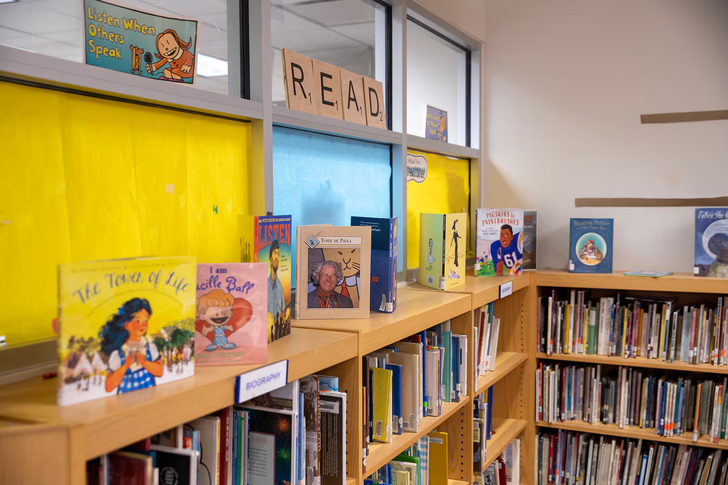
Another week, another hand-wringing session about how children can’t read.
New York Focus, as shared to me via Chalkbeat, interviewed several New York area teachers about children and reading and brought up two of the most conventionally feared boogeymen when it comes to child literacy. One of them I believe should be scrutinized and the other is overblown.
NYF’s Melissa Manno frames the issue a lot through the lens of the New York state and city curriculums which prioritize getting kids to learn excerpts of full works and then, per my impression, relentlessly quiz them on it using stupid online tests.
But they also brings up the spectre of social media and technology, a popular Jonathan Haidt style narrative when it comes to attention spans.
The article does this point of comparison regarding the number of novels English classes work through these days. It opens with these examples: The Giver, Wonder, and Freak the Mighty. At one point, Manno quotes a high school teacher who can’t get through three novels with her juniors and seniors after teaching “five novels and a Shakespeare play” in the 1990s.
But this kind of sounds like a self-degrading concept – the more teachers believe kids can’t get through five novels, the fewer novels they’ll bother with, especially when competing with must-read textbook excerpts for the standardized tests.
My position on the “tech is ruining kid’s ability to read” is that we’ve been going through this song and dance for generations. Music television and Total Request Live were allegedly what high schoolers in my era were interested in rather than reading. The teachers assigned five-plus novels a year, but only a minority of us read them and even fewer of us understood them.
I maintain that at the very least, kids on social networks have to exercise *some* reading and writing interaction in a way that kids just watching Carson Daly at home did not. Social networking apps and the dominance of short-form video are two of several problems, but our fallacy is thinking of past generations as completely literate, when in fact, Americans in particular usually learn how to fake reading comprehension.